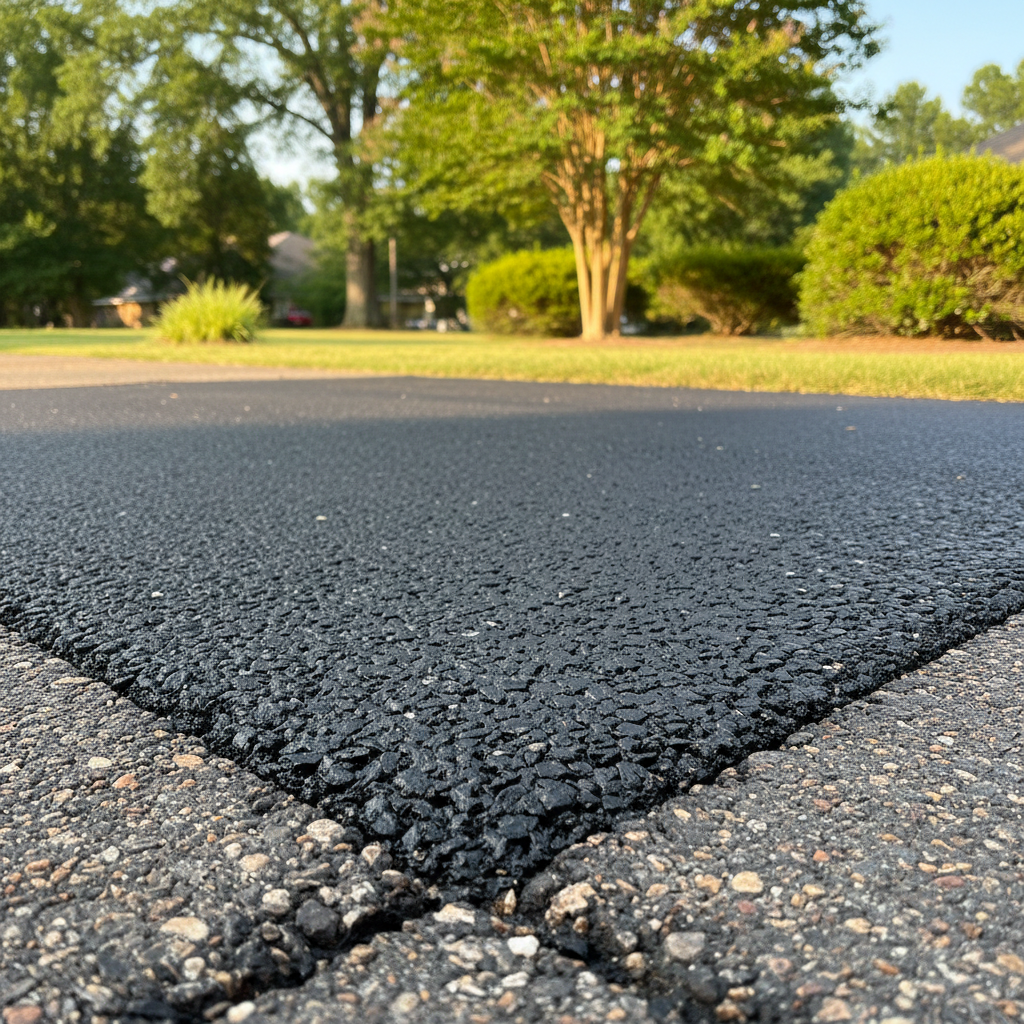
Your asphalt driveway takes a beating, especially here in Tuscaloosa with our hot summers and those sudden, heavy downpours that can really mess with the ground underneath. Eventually, you're going to see some cracks or maybe even a pothole. It's just a fact of life for asphalt.
Now, before you panic and think you need to repave the whole thing, let's talk about what you can realistically fix yourself and when it's time to call in a professional like us at Premium Asphalt Paving.
Before You Start: Assess the Damage
First things first, take a good look at your driveway. Walk it, really inspect it. What kind of damage are we talking about? This is crucial because it tells you if it's a DIY job or something bigger.
- Hairline Cracks: These are thin, usually less than 1/4 inch wide. They're common and often the first sign of wear.
- Alligator Cracks: These look like alligator skin, a network of interconnected cracks. They usually mean the base layer underneath is failing, not just the top asphalt.
- Potholes: Obvious depressions where the asphalt has completely broken away, leaving a hole.
- Edge Cracks: Cracks along the sides of your driveway, often from heavy vehicles driving too close to the unsupported edge.
- Raveling: This is when the aggregate (the small stones) starts to come loose from the asphalt binder, making the surface rough and crumbly.
If you're seeing hairline cracks, small potholes (think a dinner plate or smaller), or minor raveling, you've probably got a good shot at fixing it yourself. Anything bigger – widespread alligator cracking, huge potholes, or significant structural issues – that's when you're going to save yourself a lot of headache and money by bringing in the pros.
DIY Asphalt Repair: What You'll Need & How to Do It
Alright, for those smaller issues, here's what you'll generally need and how to tackle it. You can find most of this stuff at your local hardware store or home improvement center.
For Cracks (Hairline to 1/2 inch wide):
You'll want a good quality asphalt crack filler. These usually come in a caulk tube or a pourable jug.
- Clean it out: Use a wire brush, screwdriver, or even a leaf blower to get all the dirt, debris, and loose bits out of the crack. It needs to be super clean for the filler to stick.
- Apply the filler: Follow the product instructions. For tubes, just squeeze it in. For pourable, slowly pour it into the crack until it's slightly overfilled.
- Smooth it (optional): Some folks like to use a trowel or even their finger (wear gloves!) to smooth the filler flush with the driveway surface.
- Let it cure: Give it plenty of time to dry and cure. Don't drive on it too soon.
For Small Potholes (Dinner plate size or smaller):
You'll need cold patch asphalt mix. This stuff is designed to be applied without heating.
- Clean and square up: This is important. You need to remove all loose asphalt and debris from the pothole. Use a chisel and hammer to square off the edges of the pothole as much as possible. This gives the new material something solid to bond to.
- Compact the base: If the base of the pothole is soft, compact it with a tamper or a heavy piece of wood. You want a firm foundation.
- Fill with cold patch: Shovel the cold patch into the hole, mounding it up slightly higher than the surrounding pavement.
- Compact, compact, compact: This is the most crucial step. Use a hand tamper, a heavy roller, or even drive your car over it slowly a few times. You want to compact it as much as possible to prevent it from sinking later. The more you compact, the longer it'll last.
- Smooth it out: Once compacted, you can use a shovel or trowel to smooth the surface.
When to Call a Pro (That's Us!)
Look, I'm all for saving a buck and doing what you can yourself. But there are definitely times when DIY just won't cut it, and trying to fix it yourself will end up costing you more in the long run. Here's when you should pick up the phone and give Premium Asphalt Paving a call:
- Extensive Alligator Cracking: This isn't just surface deep. It means your base is failing, and you need a more substantial repair, possibly even an overlay or full replacement of that section.
- Large Potholes or Multiple Potholes: If you've got craters or your driveway looks like Swiss cheese, cold patch isn't going to be a long-term solution. We have the equipment and hot mix asphalt to do a permanent repair.
- Drainage Issues: If water is pooling on your driveway, especially near your house, that's a serious problem. It can lead to foundation issues. We can assess the grading and fix it properly. Our clay soils here in Tuscaloosa don't mess around when it comes to water.
- Sagging or Depressions: If sections of your driveway are sinking or have significant depressions, it's a sign of a failing sub-base. This requires excavation and rebuilding, not just patching.
- You're Just Not Comfortable: Hey, no shame in that! Asphalt work can be tough, heavy, and messy. If you'd rather spend your Saturday doing something else, or you're not confident in your ability to get a good result, that's what we're here for.
Doing a small repair yourself can extend the life of your driveway and save you money. But knowing when to call in the experts for bigger jobs means you'll get a durable, lasting repair that protects your investment. Don't hesitate to reach out if you're unsure – we're always happy to take a look and give you an honest assessment.